Best Kitchen Colour Schemes for East Lothian Interiors
East Lothian light is particular. The wide skies over the Firth of Forth flood north-facing rooms with a cool, blue-grey wash, while south-facing kitchens in sandstone cottages around Haddington can read surprisingly warm by mid-morning. Choosing kitchen colour schemes that work with that light, rather than fighting it, is the single most practical thing you can do before picking up a paint fan deck.
How Local Light Shapes Your Colour Choices
The coastal belt from Musselburgh through to North Berwick sits in one of Scotland's sunniest strips, but "sunny" here means a bright, diffuse light rather than the warm Mediterranean gold people sometimes imagine. Colours that look rich in a London showroom can read flat or chalky under an East Lothian sky. Mid-toned greens, soft clay whites and muted sage perform consistently well because they absorb and reflect that neutral Scottish daylight rather than competing with it.
Properties inland, particularly older stone farmhouses and Victorian terraces in Tranent or Prestonpans, often have smaller windows and lower ceilings. There, very pale colours can look stark. A warm off-white such as Farrow and Ball's Clunch or Little Greene's Bone gives these kitchens breathing room without washing them out.
Popular Kitchen Colour Schemes Right Now
Neutral base colours still dominate fitted kitchen choices across East Lothian. Shaker-style kitchens in soft white, warm grey or pale sage account for the majority of enquiries our fitted kitchen specialists receive. These shades photograph well, work across a broad range of worktop materials and date slowly.
Greens and Sage
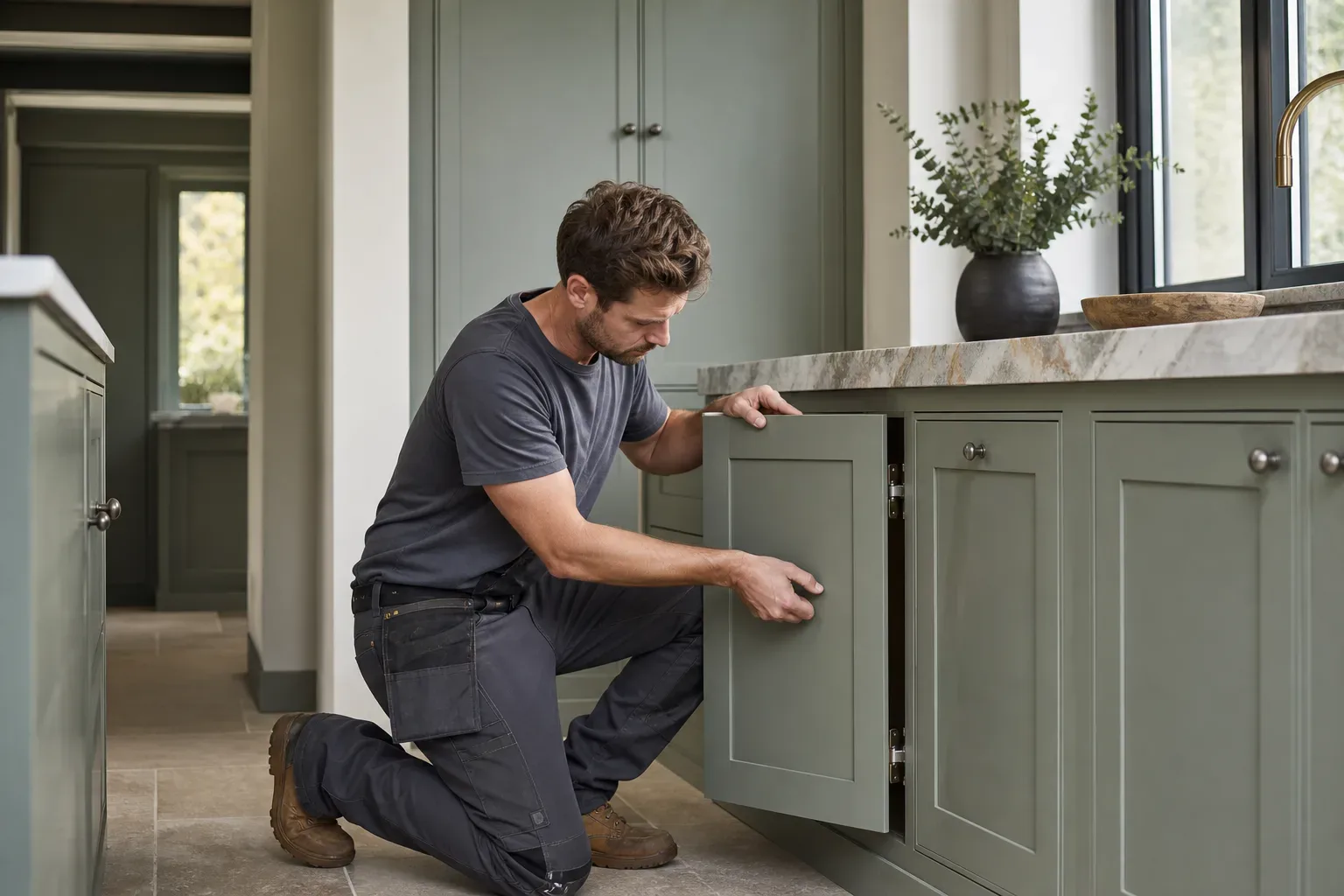
Sage green has moved from trend to near-classic status. Deeper forest greens, such as Dulux's Fenland or Farrow and Ball's Mizzle, pair naturally with the agricultural landscape visible from so many kitchens in the villages between Haddington and Dunbar. Against a quartz worktop in a light grey, fitted at around £200–£400 per linear metre, this palette reads both contemporary and rooted.
Warm Whites and Creams
A warm white is rarely as simple as it sounds. Picking one with a yellow or pink undertone rather than a blue base stops the kitchen from feeling clinical in winter months. Colours sitting in the white-to-cream range, like Jotun's White Asparagus or Benjamin Moore's White Dove, give cabinetry a gentle lift without committing to a full colour. These work particularly well in handleless contemporary kitchens where the absence of hardware means the cabinet face is the dominant visual element.
Navy and Deep Blue
Deep navy is a confident choice and one that earns its place in East Lothian interiors where glimpses of the Firth appear through the window. It is most successful on lower cabinetry paired with a lighter upper cabinet or open shelving, which prevents the room from feeling heavy. Brass or brushed copper handles and a solid oak worktop at £100–£250 per linear metre fitted complement navy without tipping into pastiche.
Dark Kitchen Colour Schemes
Dark kitchen colour schemes work well in East Lothian homes when the room has adequate artificial lighting and at least one good natural light source. Charcoal, deep forest green and near-black anthracite have grown steadily in popularity, especially in open-plan extensions where the kitchen forms part of a larger living space.
The practical consideration is finish. A matt or eggshell finish on dark cabinetry hides fingerprints better than gloss and reduces the mirror effect that can make a dark kitchen feel oppressive at night. Pairing dark units with a lighter splashback tile, pale ceiling and reflective surfaces keeps the room feeling open.
In newer builds around Prestonpans and Tranent with larger bi-fold or sliding door installations, dark kitchens can be genuinely striking. The key is ensuring the artificial lighting plan is designed before the units are fitted, not added as an afterthought.
Choosing Worktop Colours to Complement Your Scheme
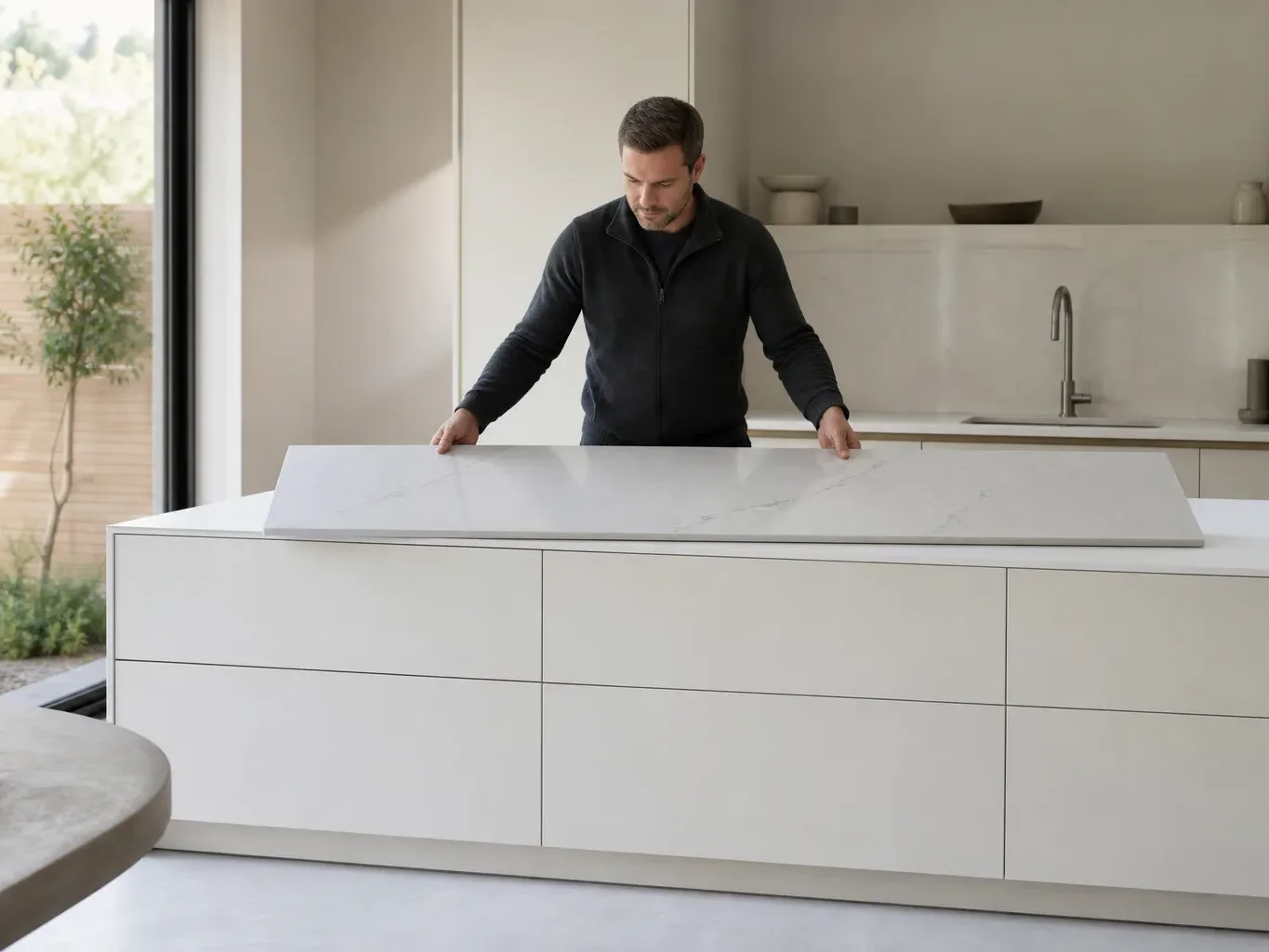
The worktop is often the largest single surface in the kitchen, so it functions as a second colour decision rather than a neutral background. Quartz worktops in honed white or warm greige read differently under artificial and natural light and are worth viewing in your own kitchen space before committing.
Granite, fitted at roughly £250–£500 per linear metre, brings natural variation that can introduce additional tones. A dark absolute black granite beside a sage green cabinet looks clean and considered. A more veined silver grey granite works against warm whites and creams without adding visual noise.
Solid wood worktops in oak or walnut introduce warmth quickly. Walnut sits particularly well against painted cabinetry in charcoal or deep green because it adds contrast without colour conflict. Oak works across virtually every scheme covered here.
Matching Colours to Cabinet Style
The cabinet style shapes how a colour reads. Shaker doors with visible frame lines create shadow and depth, which means a mid-tone colour can appear a shade darker than the same paint on a flat-fronted door. Contemporary handleless kitchens with smooth profiles show the colour in full, making subtle undertones more visible.
In-frame cabinetry, common in higher-spec projects priced from around £20,000, often suits traditional hues: warm whites, aged greens and soft blues that reference country house interiors. Flat-panel handleless designs read better in bolder, more contemporary shades where the cleaner geometry supports a stronger colour statement.
Ordering Samples and Testing in Your Own Space
A paint sample is non-negotiable. The difference between a colour on a card and that same colour on a full cabinet door viewed in your kitchen's actual light can be considerable. Most specialist paint brands sell large A4 sample cards or returnable door samples. Live with at least two or three options over five to seven days, viewing them at different times of day and under your existing artificial lighting.
East Lothian homes with west-facing kitchens will see their chosen colour shift significantly between a grey morning and a late afternoon of low golden light. What reads as a neutral sage at 9:00 am may appear almost yellow by 17:00 in summer. Observing that shift before committing protects against an expensive repaint.
Working with Your Kitchen Fitter on Finish Specification
When you commission a fitted kitchen through a local specialist, the colour conversation should happen early, not at the end of the design process. Cabinet paint finishes, worktop colours and wall paint interact and need to be specified together.
A written quote following a site survey, typically delivered within five working days, should reference the finish specification so there is no ambiguity at the installation stage. A standard installation runs three to five days for a straightforward mid-size kitchen, which is a short window to resolve any colour decisions that were left open. Settling the full palette before work begins means the fitter can plan sequences and avoid unnecessary masking or rework.
Frequently Asked Questions
What Kitchen Colour Schemes Are Popular?
Warm whites, sage greens and soft greys are the most consistently popular kitchen colour schemes across East Lothian. Navy lower cabinetry paired with lighter uppers is also a strong choice, particularly in coastal properties near North Berwick or Dunbar. These palettes work across shaker, handleless and in-frame cabinet styles and tend to age well over time.
What Are Dark Kitchen Colour Schemes?
Dark kitchen colour schemes use deep charcoal, forest green, anthracite or near-black tones on cabinetry, often contrasted with lighter worktops or splashbacks. They suit open-plan spaces with good natural light and require a planned artificial lighting layout to avoid the room feeling oppressive at night. A matt or eggshell finish is recommended over gloss to minimise fingerprints and reduce unwanted reflection.
What Colours Work Best in a North-facing East Lothian Kitchen?
North-facing kitchens in East Lothian receive cool, blue-toned natural light, which can make stark whites appear cold and chalky. Warm off-whites with a yellow or pink undertone, soft clay shades and mid-toned greens perform better because they counteract the cool cast rather than amplifying it. Avoiding blue-based whites and very pale cool greys makes the biggest practical difference.
How Do I Choose a Worktop Colour to Match My Kitchen Scheme?
Treat the worktop as a second colour decision rather than a neutral. Quartz in honed white or greige works alongside most painted cabinet colours and is typically fitted at £200–£400 per linear metre in East Lothian. Darker worktops in granite or walnut create contrast against sage green or warm white cabinetry, while oak wood works across virtually every palette without introducing colour conflict.
Should I Choose My Kitchen Colour Before or After the Cabinet Style?
Choosing the cabinet style first makes the colour decision easier, because the door profile affects how a colour reads. Shaker doors create shadow that deepens a mid-tone shade, while flat contemporary handleless fronts show the full colour and its undertones clearly. Colour and finish specification should be confirmed during the design stage, before a written quote is issued, to avoid costly changes once installation begins.