Quartz vs Granite Worktops for East Lothian Kitchens
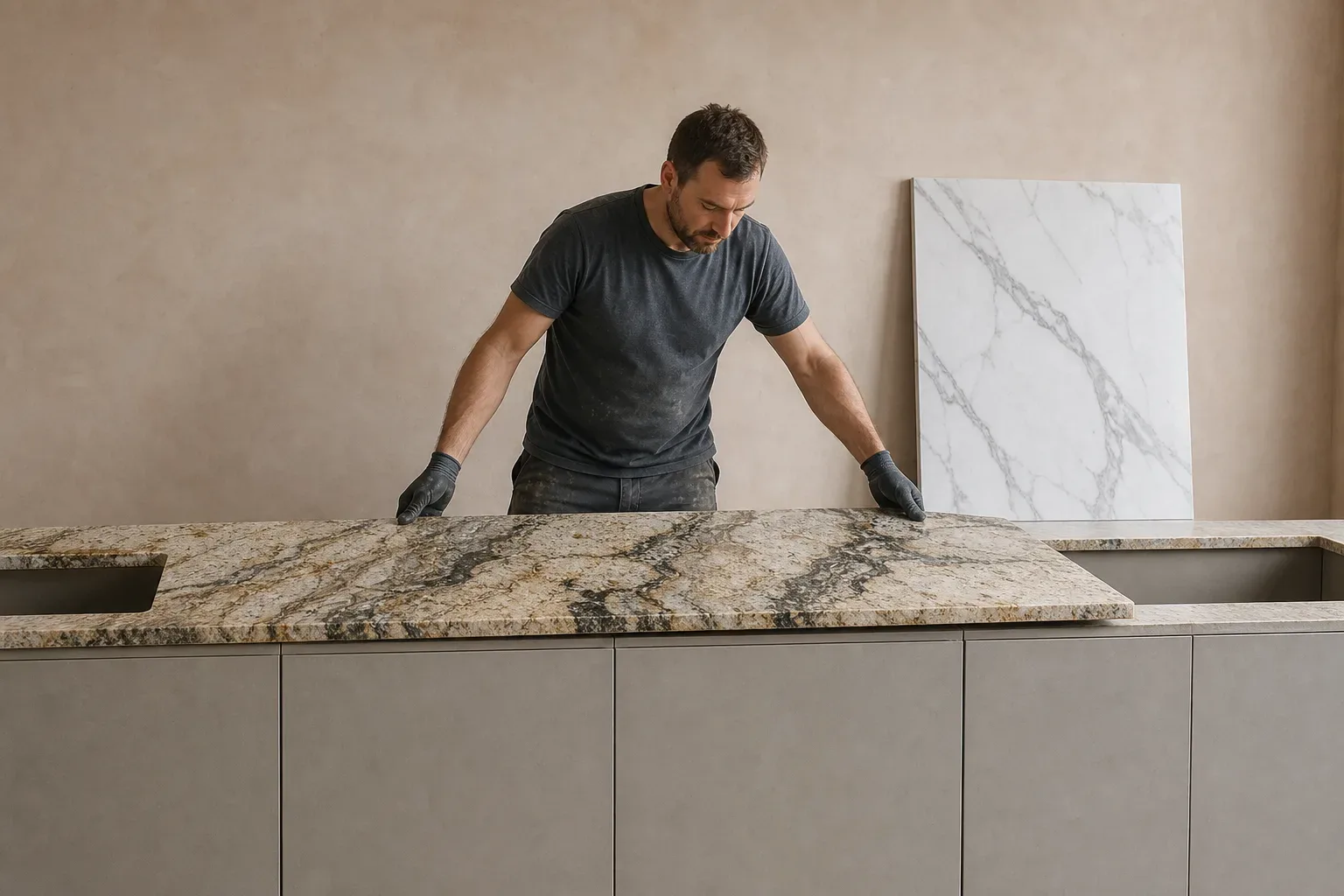
Stone Worktops in East Lothian - What Buyers Actually Need to Know
Choosing between quartz and granite comes down to three things: how the surface performs under daily use, how it looks over time, and what the total installed cost means for your budget. Both materials are genuinely excellent worktops. The differences are practical rather than dramatic, and understanding them before you order saves regret later.
As fitted kitchen specialists working across East Lothian, from Musselburgh to Dunbar and across to North Berwick, we see both materials go in regularly. Neither is universally superior. The right call depends on your kitchen's layout, how you cook, and the aesthetic direction you are heading.
Quartz Worktops - Consistency, Colour Range and Low Maintenance
Quartz worktops are engineered rather than quarried as slabs. Ground quartz crystals, roughly 90–95% of the material, are bound with polymer resin and pigment under high pressure. That manufacturing process produces a non-porous surface with no need for annual sealing.
For East Lothian households where the kitchen doubles as a busy family space, the zero-maintenance sealing requirement is a genuine advantage. Red wine, coffee, and cooking oils sit on the surface rather than absorbing into it. A damp cloth handles most spills without specialist cleaners.
Colour Consistency
Because quartz is manufactured, every slab in a batch closely matches the showroom sample. If you are fitting a large kitchen with multiple runs of worktop or adding an island to an existing layout, colour matching across slabs is predictable. Granite cannot guarantee that, and the variation can be significant between slabs from the same quarry batch.
Quartz and Heat
Quartz does not tolerate heat as well as granite. Placing a very hot pan directly from the hob onto quartz can cause discolouration or micro-cracking at the resin binder. Trivets and pan stands matter with quartz, particularly around induction hobs and gas ranges. This is not a dealbreaker, but it is a routine discipline worth building in from the start.
Quartz Worktop Cost in East Lothian
Installed quartz worktops in East Lothian typically run £200–£400 per linear metre, fitted. The spread reflects slab thickness (20 mm versus 30 mm is a meaningful price step), edge profile complexity, and supplier. A standard 3-metre run of quartz might therefore cost between £600 and £1,200 installed, and that figure scales linearly for larger kitchens.
Granite Worktops - Natural Stone, Heat Resistance and Unique Character
Granite is quarried igneous rock, cut and polished into slabs. Each slab is genuinely unique, carrying the natural veining, flecks, and tonal variation formed over millions of years. For buyers who want a worktop that cannot be exactly replicated anywhere else, that is a meaningful point.
Heat and Scratch Resistance
Granite handles heat far better than quartz. A hot pan placed directly on a polished granite worktop will not cause the surface damage that the same pan risks on quartz. Granite is also extremely hard, registering 6–7 on the Mohs scale, so everyday scratching from cutlery and ceramic pots is rarely a concern.
Porosity and Sealing
Granite is porous. An unsealed granite worktop will absorb red wine, cooking oil, and acidic juices over time, leading to staining that is difficult or impossible to remove. Most granite supplied for kitchens arrives pre-sealed, but the sealer needs refreshing roughly every one to three years depending on how heavily the kitchen is used. A quick water-bead test tells you whether the surface is still protected: if water soaks in rather than beading, it is time to reseal.
Granite Worktop Cost in East Lothian
Installed granite in East Lothian runs £250–£500 per linear metre fitted. The wider range compared to quartz reflects stone rarity, the amount of slab wastage when cutting around awkward configurations, and the quarry source. Rarer granite colours and exotics from Brazil or India sit at the upper end of that range. More common grey and black granites are priced closer to the quartz midpoint.
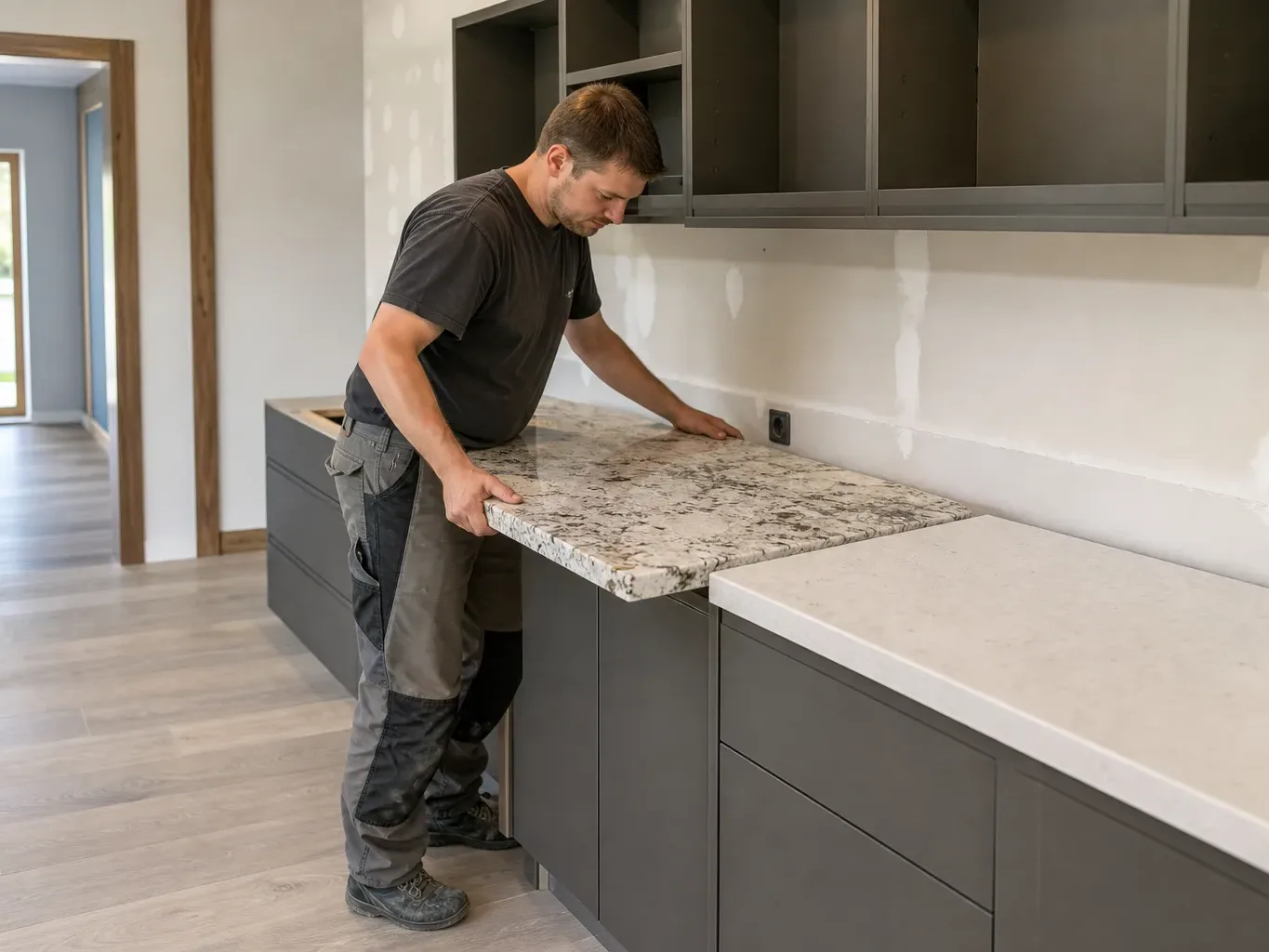
Quartz vs Granite - Side by Side
Both materials are hard-wearing. Both look premium in a finished kitchen. The practical differences stack up as follows.
Maintenance: Quartz requires no sealing. Granite requires sealing every one to three years.
Heat tolerance: Granite handles direct heat from pans without damage. Quartz requires trivets.
Colour consistency: Quartz is predictable across slabs. Granite varies naturally, which is either a feature or a challenge depending on your project.
Appearance: Granite offers unique natural movement and depth. Quartz provides cleaner, more uniform aesthetics that suit contemporary handleless kitchens particularly well.
Cost range (fitted): Quartz at £200–£400 per linear metre; granite at £250–£500 per linear metre. Granite's upper ceiling is higher, mainly due to stone sourcing.
Which Material Suits East Lothian Kitchens Best
There is no single right answer, but your cooking habits and design brief reliably point towards one or the other. East Lothian properties range from farmhouses with Aga-style cooking setups to new-build open-plan spaces in Prestonpans and Tranent. The material choice should reflect how that specific kitchen is actually used.
For households with young children, frequent cooking and limited patience for maintenance schedules, quartz is the lower-friction choice. The non-porous surface tolerates the chaos of a busy kitchen without regular intervention.
For buyers fitting a more traditional kitchen, or anyone with a heritage property in Haddington or North Berwick, granite's natural depth and warmth reads authentically against aged timber, stone floors, and classic cabinetry. Its heat tolerance is also a practical match for solid-fuel ranges and gas cooking setups common in older East Lothian homes.
Getting the Right Specification for Your Project
Edge profile, thickness and finish affect both the final look and the price. A polished 30 mm quartz with a waterfall edge on a kitchen island costs materially more than a honed 20 mm slab with a simple square edge. The same logic applies to granite. Before fixing a budget, it is worth pricing your preferred specification rather than working from mid-range averages.
Site measurement is essential. Both quartz and granite are templated after the carcasses and appliances are in position, which means the worktop order cannot go in until installation is otherwise complete. Factoring that sequencing into your project timeline prevents delays. A full kitchen installation in East Lothian typically takes 3–5 days for a standard fit; worktop templating and fabrication then adds one to two weeks on top before the stone is returned for fitting.
Quartz worktops in East Lothian are available in a wider range of supplier options than they were even five years ago, which has increased competitive pricing. Granite remains somewhat more specialist, particularly for rarer slabs, so budget extra time for sourcing if you have a specific stone in mind.
Frequently Asked Questions
Quartz vs Granite Worktops - Which Is Better?
Neither is objectively better; the right choice depends on how you use your kitchen. Quartz is non-porous and needs no sealing, making it the lower-maintenance option. Granite handles direct heat from pans without damage and offers unique natural character. Both materials are extremely durable and work well in East Lothian kitchens.
How Much Do Quartz Worktops Cost in East Lothian?
Installed quartz worktops in East Lothian typically cost £200–£400 per linear metre. The price varies based on slab thickness, edge profile and supplier. A standard 3-metre run could cost between £600 and £1,200 fitted.
Do Quartz Worktops Need Sealing?
No. Quartz is a non-porous engineered material, so it does not require sealing at installation or at any point during its life. This is one of its key practical advantages over granite, which needs resealing every one to three years depending on use.
Can You Put Hot Pans on a Quartz Worktop?
It is not advisable. Quartz contains polymer resin binders that can discolour or micro-crack under intense direct heat. Always use a trivet or pan stand between a hot pan and a quartz surface. Granite does not have this limitation and tolerates direct heat from pans without damage.
How Long Does Worktop Fitting Take After a Kitchen Is Installed?
After your kitchen carcasses and appliances are in position, a fabricator will visit to template the worktop area precisely. Quartz and granite then need to be cut and finished in a workshop, which typically takes one to two weeks before the stone is returned for fitting. Plan this sequencing into your overall project timeline to avoid delays.